
How Childhood Trauma Impacts Adulthood & What You Can Do About It
May 11, 2025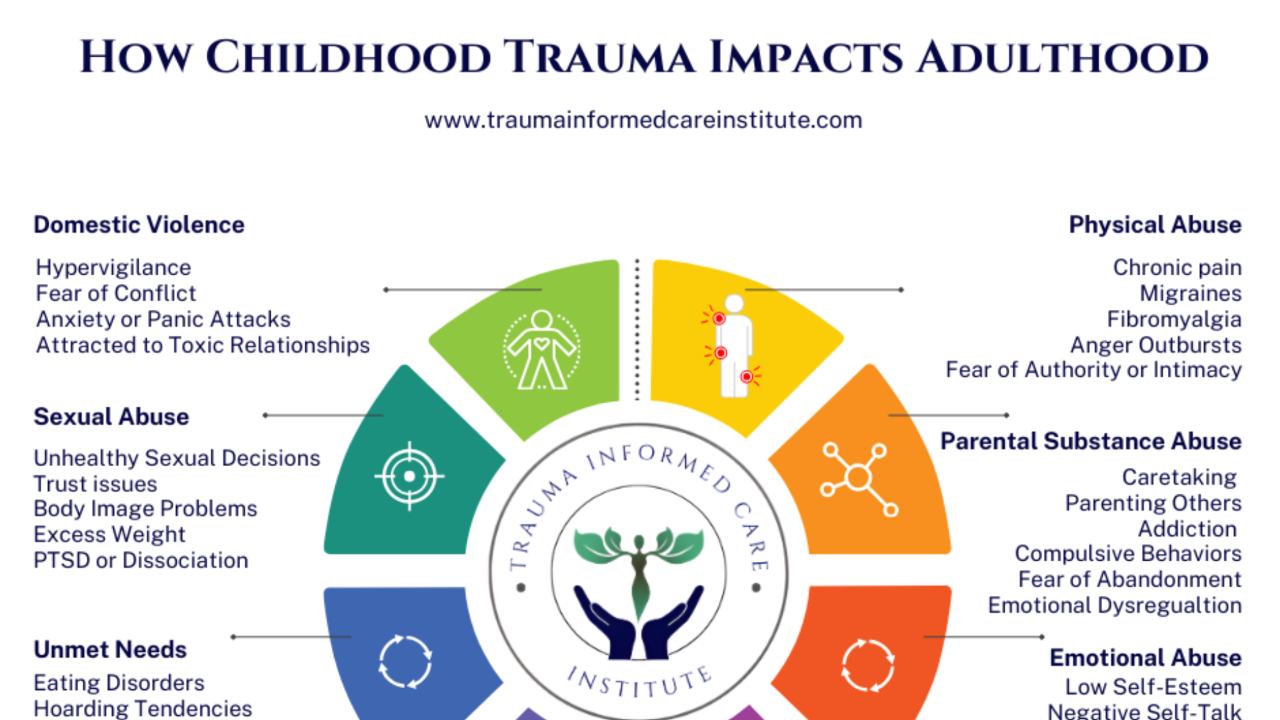
Have you ever wondered why certain patterns keep repeating in your life? Things like toxic relationships, chronic anxiety, or an overwhelming need to please others?
You’re not alone. What many don’t realize is that the root of these struggles may lie in Adverse Childhood Experiences(ACEs). These are early life traumas that, if left unprocessed, can follow us into adulthood, shaping our emotional responses, behaviors, relationships, and even our physical health.
At the Trauma Informed Care Institute, we believe awareness is the first step toward healing. That’s why we created a simple, visual guide to help you connect the dots between childhood trauma and adult challenges.
Let’s take a closer look at some of the most common ACEs and how they show up later in life:
Physical Abuse
-
In Childhood: Being hit, slapped, or physically harmed.
-
In Adulthood: Chronic pain, fibromyalgia, migraines, anger outbursts, fear of intimacy or authority.
Emotional Abuse
-
In Childhood: Being constantly criticized, belittled, or threatened.
-
In Adulthood: Low self-esteem, people-pleasing, perfectionism, anxiety, and depression.
Sexual Abuse
-
In Childhood: Any unwanted sexual contact or exposure.
-
In Adulthood: PTSD, dissociation, trust issues, body image problems, or unhealthy sexual behaviors.
Emotional Neglect
-
In Childhood: Emotional needs being ignored or dismissed.
-
In Adulthood: Feeling unworthy, codependent tendencies, difficulty forming healthy attachments.
Physical Neglect (Unmet Needs)
-
In Childhood: Lack of food, shelter, medical care, or hygiene.
-
In Adulthood: Eating disorders, fatigue, hoarding, poor boundaries.
Domestic Violence
-
In Childhood: Witnessing violence between caregivers.
-
In Adulthood: Fear of conflict, hypervigilance, anxiety, and attraction to toxic relationships.
Parental Substance Abuse
-
In Childhood: A parent misusing alcohol or drugs.
-
In Adulthood: Addiction, caretaking roles, compulsive behaviors, emotional dysregulation.
Parental Mental Illness or Emotional Absence
-
In Childhood: Living with a parent who is depressed, anxious, or emotionally unavailable.
-
In Adulthood: Emotional instability, fear of abandonment, self-blame, or avoidance.
Parental Separation or Divorce
-
In Childhood: Experiencing divorce, abandonment, or inconsistent caregiving.
-
In Adulthood: Insecurity, fear of rejection, emotional “splitting,” difficulty with commitment.
Trauma Isn’t Who You Are
These patterns don’t mean you’re broken. They are survival strategies your nervous system adopted to keep you safe. But as an adult, you have the power to shift those patterns and create a new experience of life, one rooted in safety, trust, and empowerment.